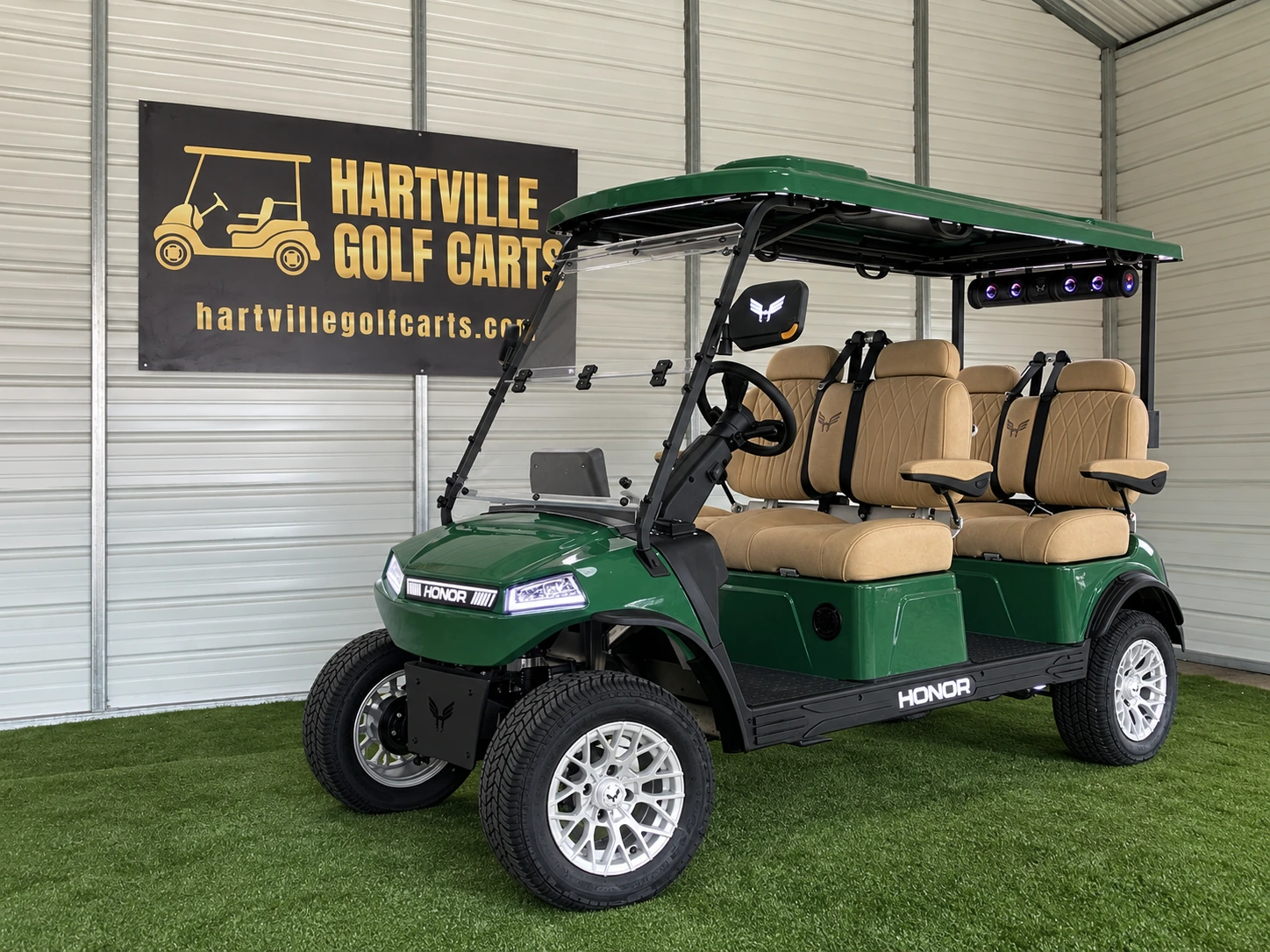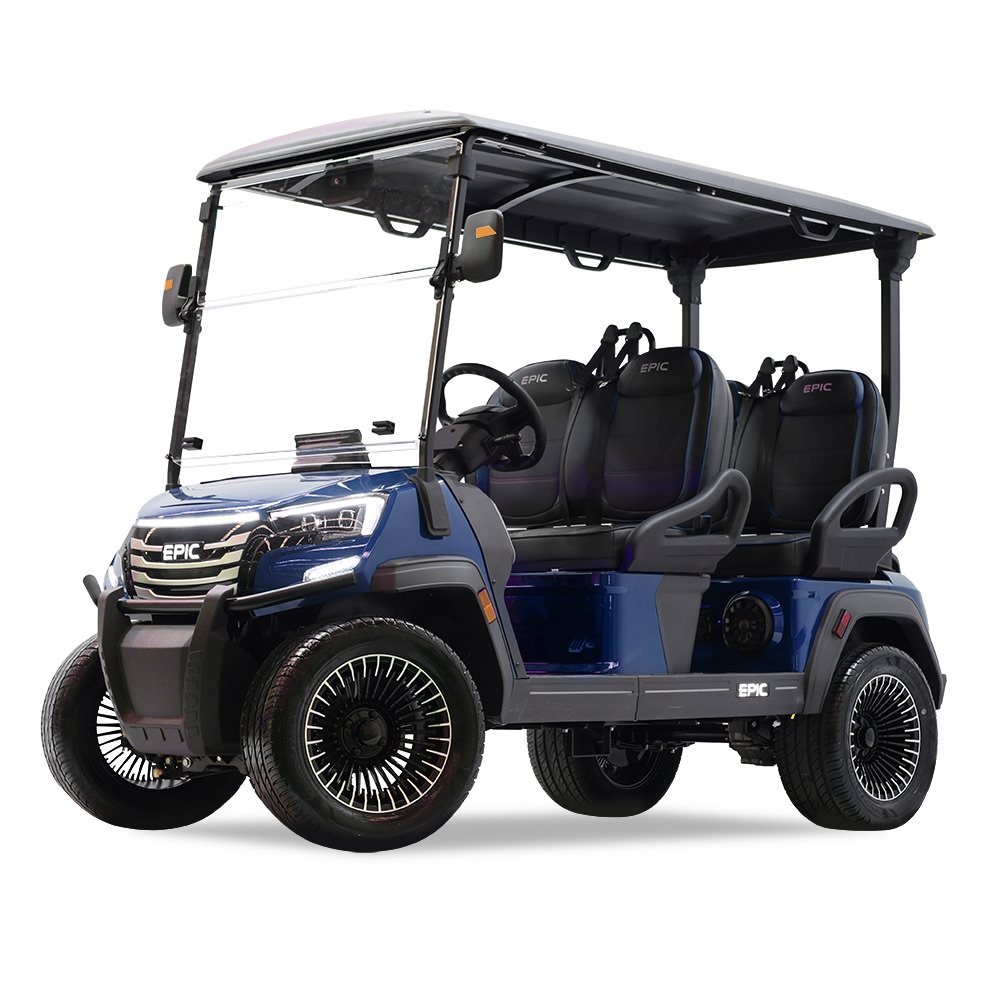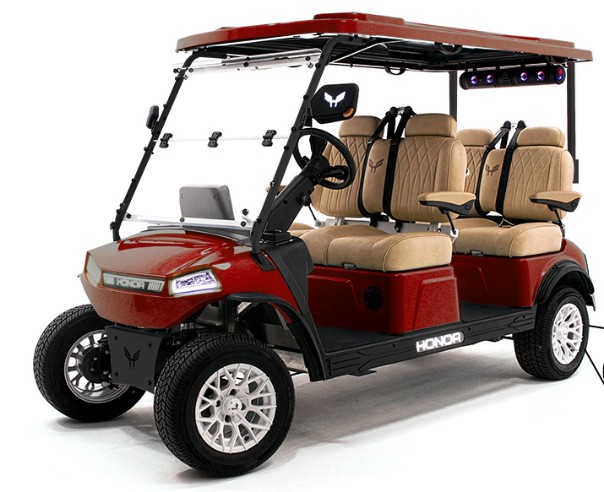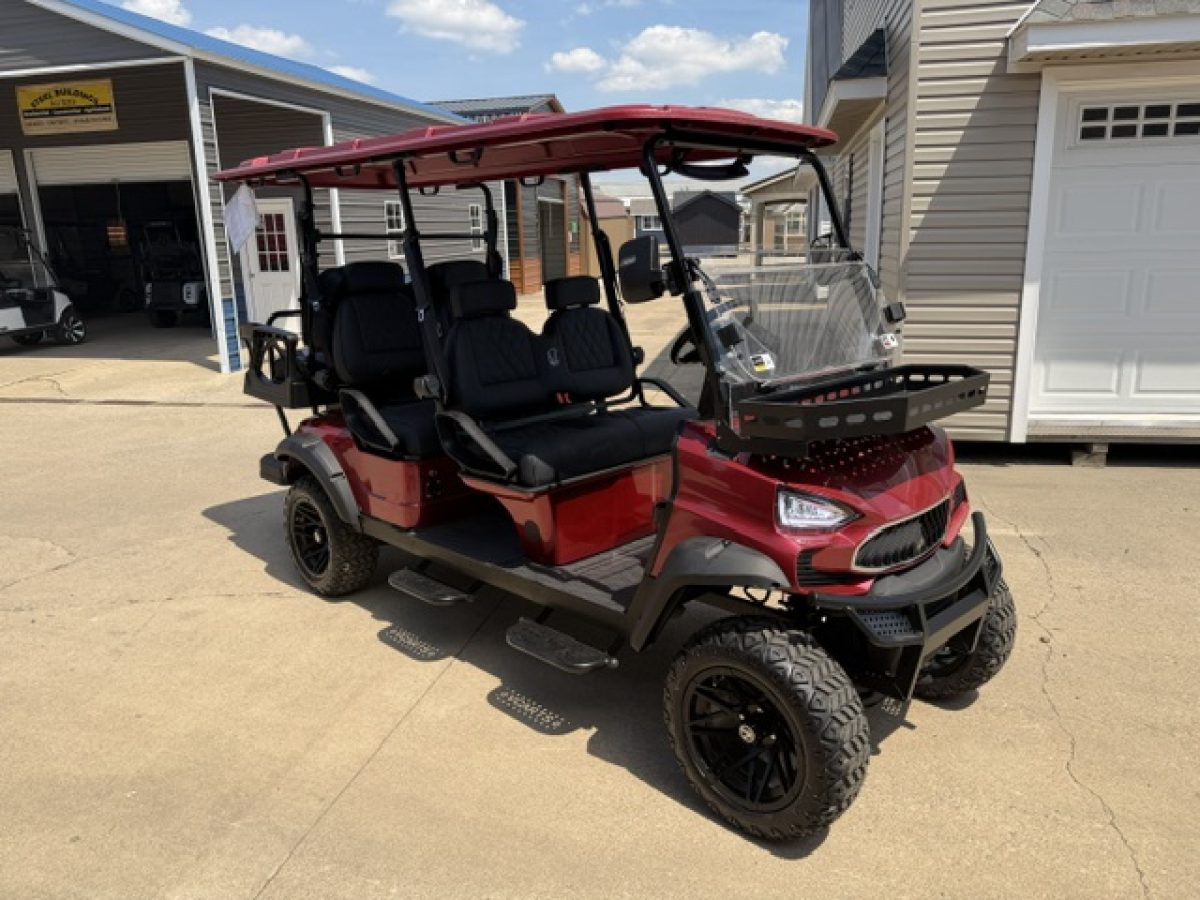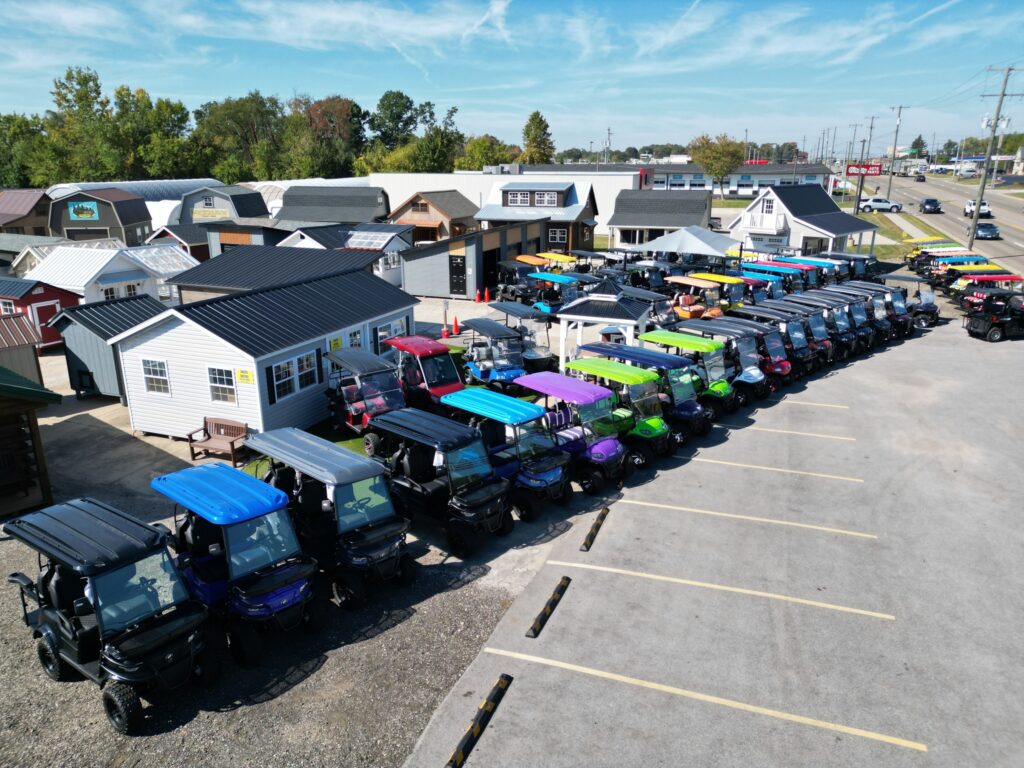


Golf cart speed depends on the exact model and its factory configuration. For example, Yamaha lists a maximum forward speed of 15 mph for its Drive2 golf models. Club Car lists 19 mph on level ground for its non-LSV Onward four-passenger configurations, while the Onward 4 Forward LSV has a 25 mph specification. These examples show why one speed range cannot describe every cart. When comparing how fast golf carts go, check the manufacturer’s rating first. Then, consider hills, passenger load, battery condition and operating restrictions. A vehicle’s maximum speed also does not establish permission to drive it on public roads.

What Determines Golf Cart Speed
The motor or engine, controller settings, gearing and tire size work together to determine a cart’s performance. Factory programming can limit maximum speed even when the power system could deliver more. Therefore, a larger motor, higher battery voltage or different battery chemistry does not automatically raise the governed top speed. Compare the complete vehicle specification rather than judging speed from one component. Also, distinguish acceleration from maximum speed. A cart may reach its rated speed more quickly without having a higher top speed.
Driving conditions affect the speed you actually experience. Hills, loose surfaces, passenger weight and cargo can change performance. Battery charge, battery condition and temperature can also matter on electric models. Compare carts under similar conditions and stay within their load limits. A manufacturer’s level-ground rating does not promise the same performance on every route. Likewise, the ability to reach a particular speed does not mean that speed suits every corner, slope or crowded area.

Standard Golf Cart Speeds
Factory golf-course carts, personal transportation carts and certified low-speed vehicles serve different purposes. A course operator may also configure a fleet for its own operating conditions. Personal-use models can have different factory limits, while certified LSVs fall into a separate regulatory category. “Personal cart” describes a use or product category rather than proving a legal vehicle classification. Check the exact model and configuration before comparing advertised speeds.
| Named Model Or Configuration | Manufacturer-Rated Speed | Conditions Or Qualification | Source |
|---|---|---|---|
| Yamaha Drive2 Golf Models | 15 mph | Maximum forward speed listed; confirm the particular powertrain and fleet setting | Yamaha Drive2 golf specifications |
| Club Car Onward 4 Passenger, Non-LSV, Gas | 19 mph | Level ground | Club Car Onward 4 Passenger specifications |
| Club Car Onward 4 Passenger, Non-LSV, Lead-Acid Electric | 19 mph | Level ground | Club Car Onward 4 Passenger specifications |
| Club Car Onward 4 Passenger, Non-LSV, Lithium | 19 mph | Level ground; listed lithium configurations | Club Car Onward 4 Passenger specifications |
| Club Car Onward 4 Forward LSV | 25 mph | Level ground | Club Car Onward 4 Forward specifications |
Manufacturer information checked November 13, 2026. Confirm the specifications for the model year and configuration you intend to purchase. Factory ratings describe capability under stated conditions, rather than a recommended speed for every journey.
Gas vs. Electric Golf Cart Speeds
Golf carts that use gas and those that use electricity do not act the same when it comes to speed and how well they run. Gas carts usually show more power besides keep a steady pace over long trips. Electric carts start fast but their pace depends on battery strength. For example:
- 36V Golf Carts – Usually run at a top speed of 12-14 mph.
- 48V Golf Carts – Reach speeds of 15-19 mph and show better burst in addition to work rate.
- Modified Electric Carts – With proper speed controls and strong batteries, these exceed 25 mph.

Golf Cart Voltage and Performance
Golf cart voltage matters for how well the vehicle works. Higher voltage batteries add more power, which leads to faster speeds moreover a better overall ride. Electric golf carts come as 36-volt, 48-volt or even 72-volt options, each with its own speed and strength. For example a 36-volt golf cart goes about 12 to 14 miles per hour, while a 48-volt one reaches around 15 to 19 miles per hour. A 72-volt battery can make the cart go even faster. Remember that higher voltage batteries need extra care and may cost more. Understanding how voltage affects performance helps you pick a battery that fits your needs for speed, cost, in addition to upkeep.

Modified and High-Speed Golf Carts
- Some golf cart owners try to improve their vehicles to make them go faster. They choose changes such as:
- Replace the motor moreover controller with stronger versions to boost speed.
- Adjust the gear ratio so the cart moves faster at the cost of lower torque.
- Swap standard lead-acid batteries with lithium-ion ones to gain more power plus efficiency.
- Change the tires to larger ones so each turn takes the cart farther.
With these changes golf carts may reach speeds between 20 and 25 mph and some custom models may go over 30 mph. All these changes must follow safety rules moreover be done with care.

Safety Considerations for High-Speed Modifications
When you make a golf cart go faster, the ride may get better but it also brings danger. Changing a cart to go faster means you must change these parts:
- Brakes – Going fast needs stronger brakes for safe stops.
- Suspension – Stronger suspension parts take more load when you run fast.
- Seat Belts & Safety Features – When you use a cart on streets or at high speeds, put in seat belts and turn signals to stay safe.
Street-Legal Golf Carts and Regulations
Golf carts allowed on streets, sometimes called low-speed vehicles, are built to run on public roads when the law permits. They must follow rules besides include safety items like lights, seat belts next to signals. They usually reach speeds of 20 to 25 mph, as set by federal rules that limit how fast they may go. Owners should look at local laws in addition to verify speed limits before they take them on public roads.

Top Speeds and Records
Golf carts can hit high speeds, particularly when they are altered or rebuilt. The usual pace stays between 12 and 15 miles per hour, yet some users have driven them much faster. Special models may move up to 50 miles per hour and the fastest golf cart, recorded by Guinness World Records, reached 119 miles per hour. One should note that such high speeds are unsafe for regular use and may lead to serious harm. For most drivers sticking to a secure and steady pace proves essential to keep both the driver and riders unharmed.
Golf Cart Maintenance
Follow the service schedule for your exact cart and power system. Check tires, brakes, steering, suspension and battery or engine systems as the manual directs. Use the specified tire pressure and approved replacement parts. Maintenance supports reliable operation, but it does not authorize a higher speed or change the vehicle’s legal classification.
If the cart becomes noticeably slower, identify the cause before buying upgrades. Battery condition, charging problems, brake drag or other faults may need attention. Describe when the problem occurs, including passenger load, terrain and charge level. That information can help a technician investigate. Avoid changing controller settings or fitting incompatible parts simply to compensate for a developing fault.

Conclusion
How fast golf carts go depends on the exact model, factory settings and driving conditions. Use manufacturer specifications to compare vehicles rather than treating voltage, battery chemistry or fuel type as a guaranteed speed rating. Also, distinguish maximum capability from a suitable operating speed and permission to drive on public roads. Before purchasing, confirm the configuration, intended route and maintenance requirements. Hartville Golf Carts can help you compare available models and discuss which options suit your passengers and everyday use.