
Golf cart weight varies much more than most people expect. A lightweight two-passenger electric cart may weigh around 600 to 900 pounds, while larger six-passenger or lifted models can exceed 1,300 pounds. Gas carts often fall within a similar overall range, although battery packs make electric carts heavier in certain configurations. So, how much does a golf cart weight? In most cases, expect roughly 600 to 1,300 pounds depending on battery type, seating capacity, body design, accessories, and whether the listed figure is dry weight or curb weight.
Lithium-powered carts can weigh less than comparable lead-acid models because lithium batteries store energy with less mass. Weight matters for towing, trailers, ramps, storage, suspension, tire selection, and everyday performance. Hartville Golf Carts carries a wide range of modern electric carts, so buyers can compare weight alongside passenger capacity, battery type, range, and intended use.
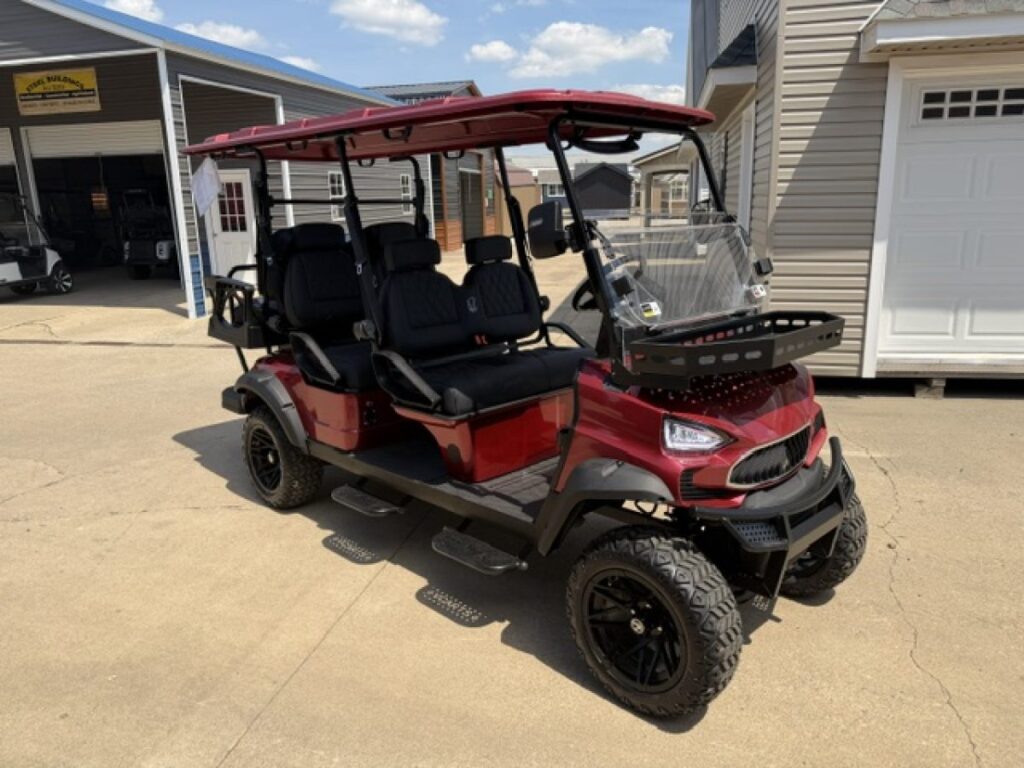
Typical Golf Cart Weight Range
Most standard golf carts weigh somewhere between 600 and 1,100 pounds. Smaller two-passenger carts usually sit toward the lower end, while four-passenger and six-passenger models can weigh considerably more. Lift kits, larger wheels, extra seats, body accessories, and upgraded batteries can push total weight even higher.
There is no single number that applies to every cart. A basic course cart may weigh several hundred pounds less than a fully equipped neighborhood vehicle. When comparing models, always check whether the manufacturer lists dry weight, curb weight, or gross vehicle weight rating. Those figures describe different things.
Dry Weight And Curb Weight Differences
Dry weight usually refers to the vehicle without certain fluids, batteries, fuel, passengers, or cargo. The exact definition can vary by manufacturer. For a gas golf cart, dry weight may exclude fuel. For an electric model, some manufacturers may list the cart without the battery pack.
Curb weight gives a more realistic picture of the cart in usable condition. It usually includes installed batteries, normal operating fluids, and standard equipment. However, it still excludes passengers and cargo. If you need weight information for towing or a trailer, curb weight is generally more useful than dry weight.

Electric Golf Cart Weight
Electric golf carts commonly weigh around 700 to 1,300 pounds depending on battery type and size. Traditional lead-acid battery packs add significant weight because several heavy batteries work together to power the cart. A six-battery system can contribute hundreds of pounds to the final curb weight.
Lithium-powered carts can be lighter because lithium batteries provide useful energy with less weight. This is one reason modern electric carts often use lithium systems. Buyers comparing newer models can browse Evolution Golf Carts to see examples of electric carts built around modern battery technology. Lower battery weight can help acceleration, efficiency, and handling without changing the basic size of the vehicle.
Gas Golf Carts Weight
Gas golf carts usually weigh around 650 to 1,000 pounds, although larger models can exceed that range. Gas carts do not carry a heavy traction battery pack, but they include an engine, fuel system, exhaust components, and fuel tank.
A gas cart’s total weight also changes with passenger capacity and equipment. A lifted four-passenger model with large tires, a rear seat, and accessories can weigh much more than a basic two-passenger course cart. Fuel adds additional weight as well, so a full tank can slightly increase the operating weight.
Battery Type And Vehicle Weight
Battery chemistry has one of the biggest effects on electric golf cart weight. Lead-acid batteries are heavy because they use dense lead plates. A full lead-acid battery bank can add several hundred pounds to the cart. That extra weight affects acceleration, braking, tire load, and energy consumption.
Lithium batteries usually weigh much less for comparable usable energy. Replacing lead-acid batteries with a compatible lithium pack can reduce total vehicle weight noticeably. However, owners should not choose a battery based on weight alone. Voltage, capacity, controller compatibility, charger requirements, mounting, and battery management systems all matter. Hartville Golf Carts can help owners compare battery systems through its Service Department.

Weight Of Four-Seater And Six-Seater Carts
Passenger capacity usually increases golf cart weight. A four-seater often weighs more than a two-seater because it needs a larger frame, longer body, rear seating, and sometimes stronger suspension. Depending on the design, a four-passenger cart may weigh around 800 to 1,200 pounds.
Six-passenger carts are heavier still. Many models can approach or exceed 1,300 pounds before passengers enter the vehicle. Larger seating layouts also increase wheelbase and frame size. Buyers should consider both empty vehicle weight and the additional weight of passengers, especially when choosing a trailer or checking suspension and tire limits.
Accessories And Lift Kits Add Extra Weight
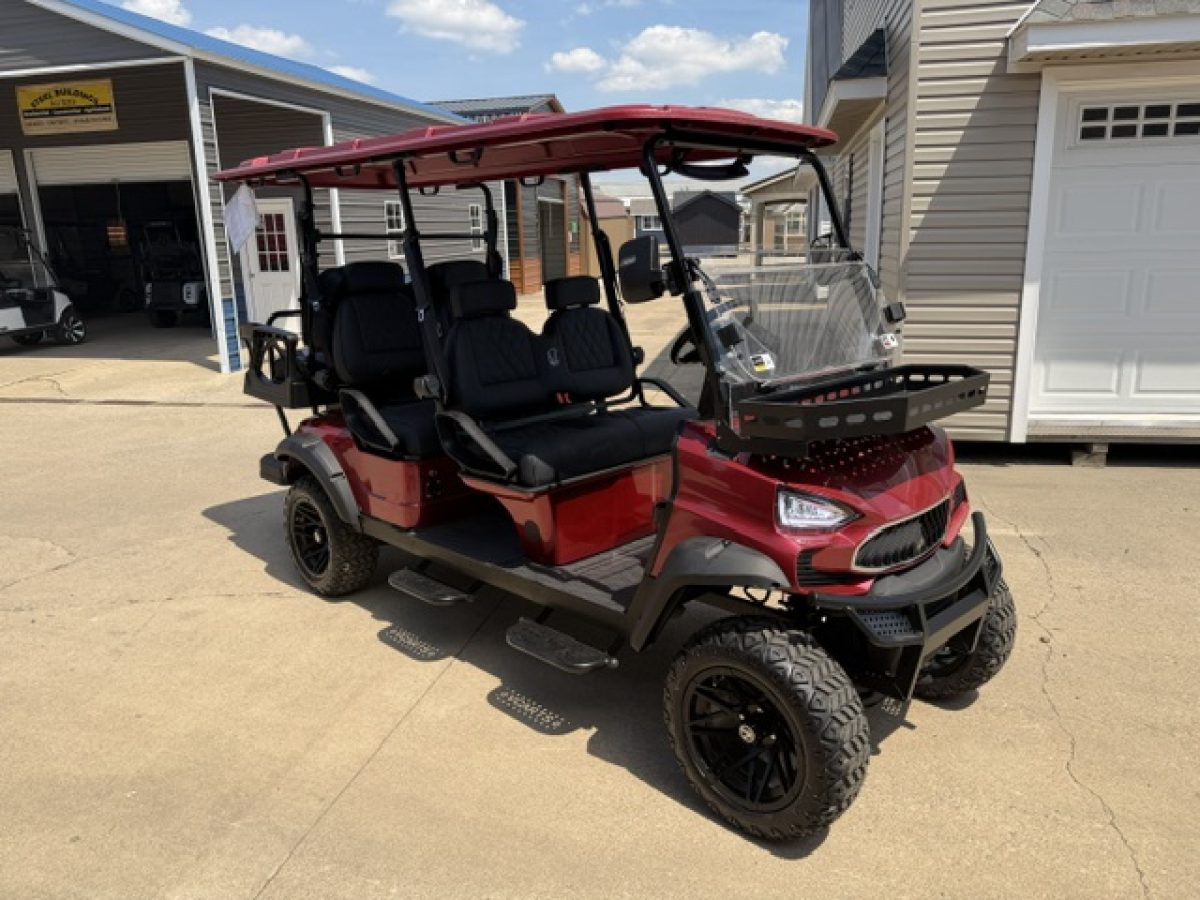
Lift kits, larger wheels, heavy-duty bumpers, rear seats, enclosures, storage boxes, windshields, and sound systems all add weight. A single accessory may not change performance much, but several upgrades together can increase the total by a noticeable amount.
Larger wheels and tires also add rotating weight, which can affect acceleration and motor load. Heavy accessories placed high on the vehicle may influence handling as well. Owners planning extensive modifications should consider total weight rather than focusing only on appearance. A cart that becomes much heavier may need stronger suspension components or different tires.
Weight Considerations For Towing And Performance
Golf cart weight matters most when transporting the cart on a trailer. The trailer must support the cart’s actual loaded weight, not just the manufacturer’s dry weight. You should also include accessories, batteries, cargo, and anything stored on the cart during transport.
The tow vehicle must handle the trailer and cart together. Trailer payload capacity, gross vehicle weight rating, hitch rating, and tongue weight all matter. The National Highway Traffic Safety Administration provides guidance on towing safely and understanding vehicle and trailer limits. Never estimate golf cart weight when towing equipment is close to its capacity.

How Weight Affects Golf Cart Performance
A heavier golf cart requires more energy to accelerate and climb hills. Extra weight can reduce range in an electric cart because the motor must work harder. Gas carts may also use more fuel under heavier loads.
Braking distance can increase as weight rises. Suspension components, tires, wheel bearings, and brakes all carry greater loads. This becomes especially important when adding passengers to a cart that already has heavy accessories. Staying within the manufacturer’s load limits helps preserve handling and mechanical reliability.
Lithium carts may feel quicker than similar lead-acid models partly because they carry less battery weight. However, motor output, controller settings, tire size, and gearing still influence overall performance.
How Much Weight Can A Golf Cart Carry
Payload capacity is different from vehicle weight. Payload tells you how much additional weight the cart can safely carry, including passengers and cargo. Many golf carts can carry several hundred pounds, but the exact capacity varies by model.
Do not assume that a larger-looking cart automatically supports more weight. Check the manufacturer’s specifications for maximum passenger and cargo limits. Overloading can affect steering, braking, suspension, tires, and frame components. It can also reduce electric range significantly.
For carts used around communities or businesses, payload capacity may matter as much as curb weight. A cart carrying four adults plus cargo can become substantially heavier than its empty specification suggests.

Conclusion
So, how much does a golf cart weight? Most golf carts fall somewhere around 600 to 1,300 pounds, but the actual number depends on battery type, passenger capacity, accessories, drivetrain, and overall design. Electric carts with lead-acid batteries can be heavier than lithium-powered versions, while larger four-seat and six-seat models usually weigh more than standard two-passenger carts.
Weight affects towing, range, acceleration, braking, tire load, and suspension performance, so it deserves attention when choosing or modifying a cart. Hartville Golf Carts offers electric golf carts in several sizes and configurations, making it easier to compare vehicle weight alongside battery type, seating capacity, range, and intended use before choosing the right model.